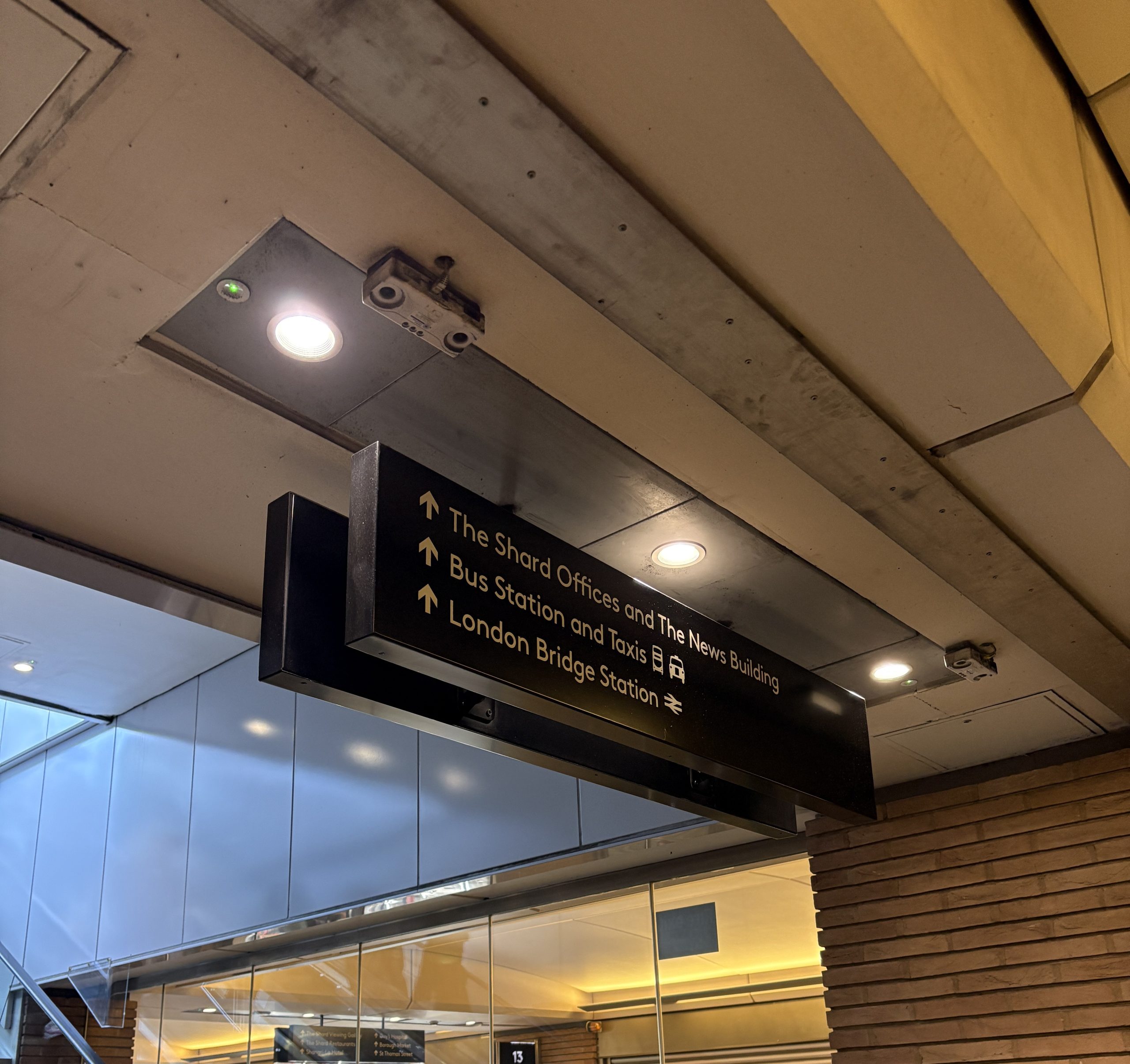
Customer: The Shard Retail Arcade
System: Legacy Brickstream people-counting sensors
Upgrade: Xovis wide-angle sensor solution
Result: Sensor estate reduced from six devices to three, with 30-day average counting accuracy improved from approximately 80% to 99.85%.
The Shard is a long-standing Axiomatic customer using a self-installed Brickstream footfall counting system maintained through their IT contractor. The original deployment consisted of six devices across three entrancess, with two sensors installed at each location to count people entering the Retail Shopping Arcade.
Over time, the customer raised concerns about the reliability and accuracy of the system. A thorough investigation was carried out to determine whether the performance issues could be resolved through configuration, calibration, repositioning or whether a hardware upgrade would be required.
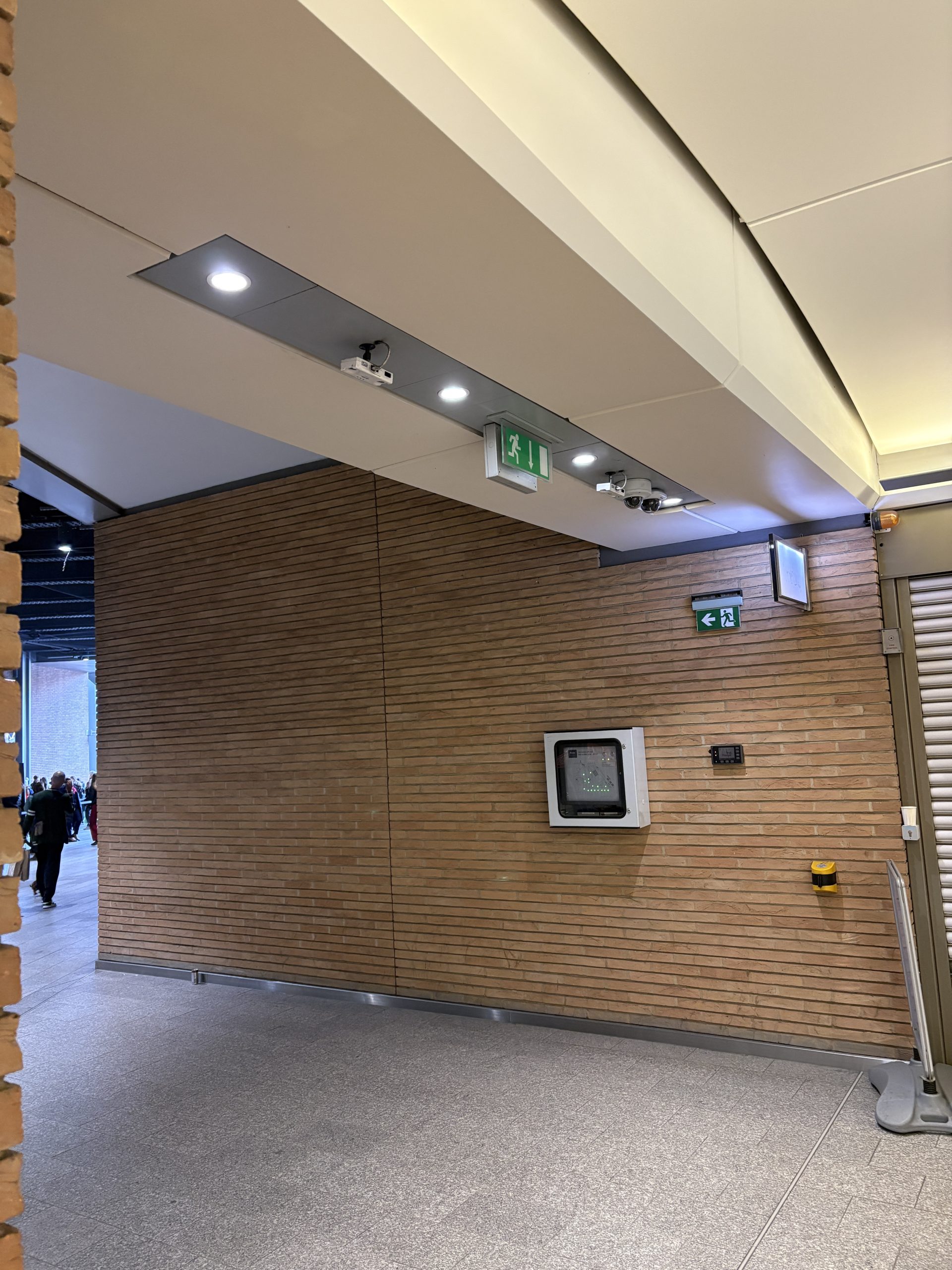
The diagnostic process combined support desk feedback, live viewing sessions and recorded observations of the monitored areas. This review identified three main causes of underperformance: sensor positioning, sensor stitching and environmental conditions.
One of the most noticeable issues was found at sensor 6. Its installed position did not provide sufficient target tracking and initialisation space for people leaving the down escalator, particularly those moving quickly. During live viewing and recording sessions, it became clear that fast-moving targets were being missed too often, reducing count confidence at that location.
The legacy Brickstream deployment relied on stitched sensor pairs to cover wider openings. Sensors 1 and 2 were stitched together, while sensors 3 and 4 formed a second stitched pair. Although stitching can extend coverage, it also introduces complexity because people must be tracked consistently as they move between overlapping sensor coverage areas.
The investigation showed that targets were not always tracked optimally through the overlapping zones, contributing to inconsistent count performance.
The Retail Shopping Arcade environment presented additional challenges. At busy times, monitored spaces could become densely populated, with people walking closely together or moving at different speeds. This type of environment can be difficult for older people-counting sensor technology, especially when combined with constrained mounting positions and stitched coverage areas.
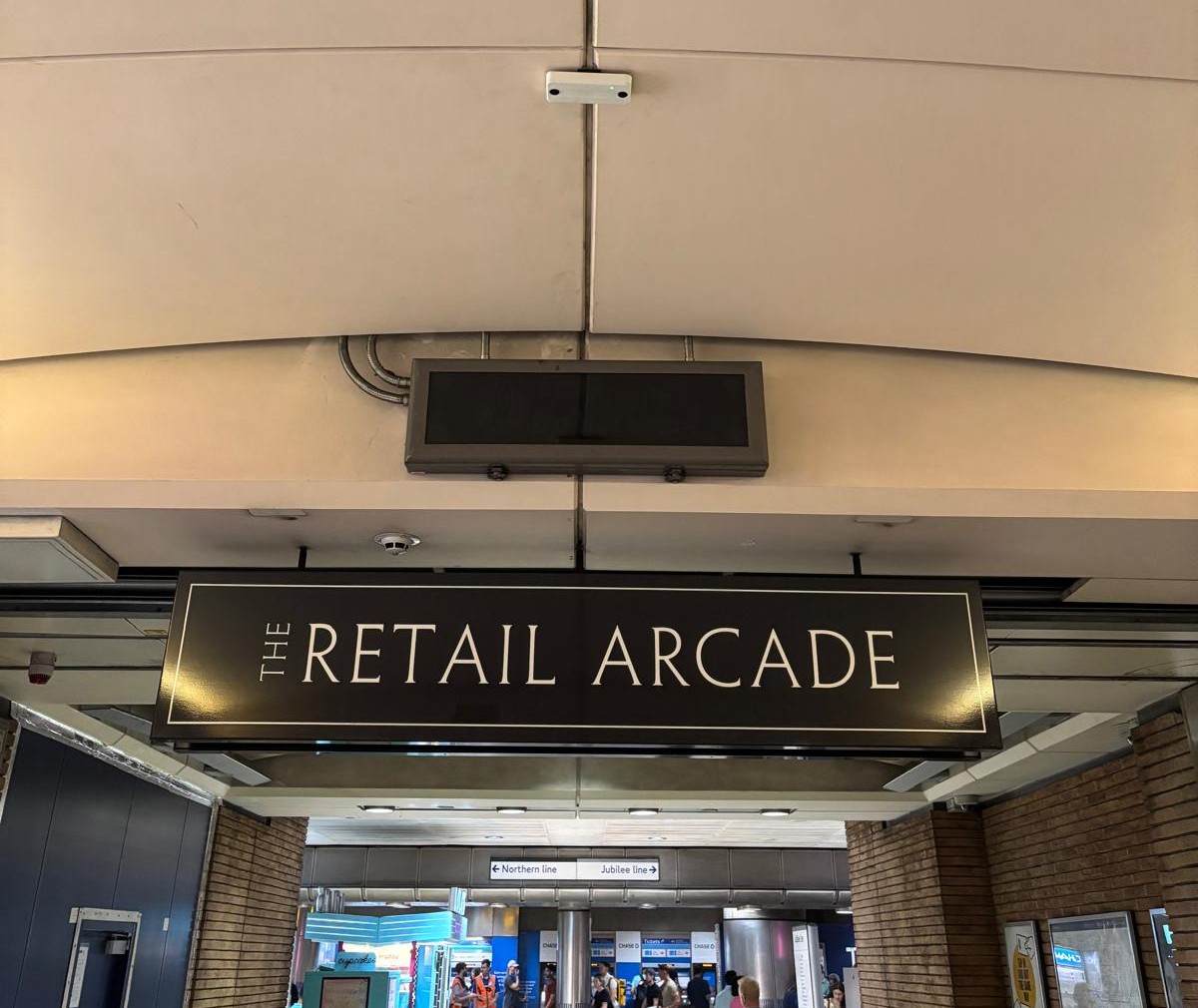
Following the diagnostic review, the support desk concluded that there were no further configuration or calibration improvements likely to deliver a reliable, lasting uplift in performance.
Repositioning the existing sensors was considered, but the age and condition of the devices indicated deeper impact on internal components.
With no guarantee that repositioning would resolve the issues, replacement became the most realistic path to performance improvement.
The proposed upgrade specified Xovis sensors with wide-angle lens options, including two new PFL sensors.
This reduced the number of devices needed from six to three while still covering the required monitored spaces.
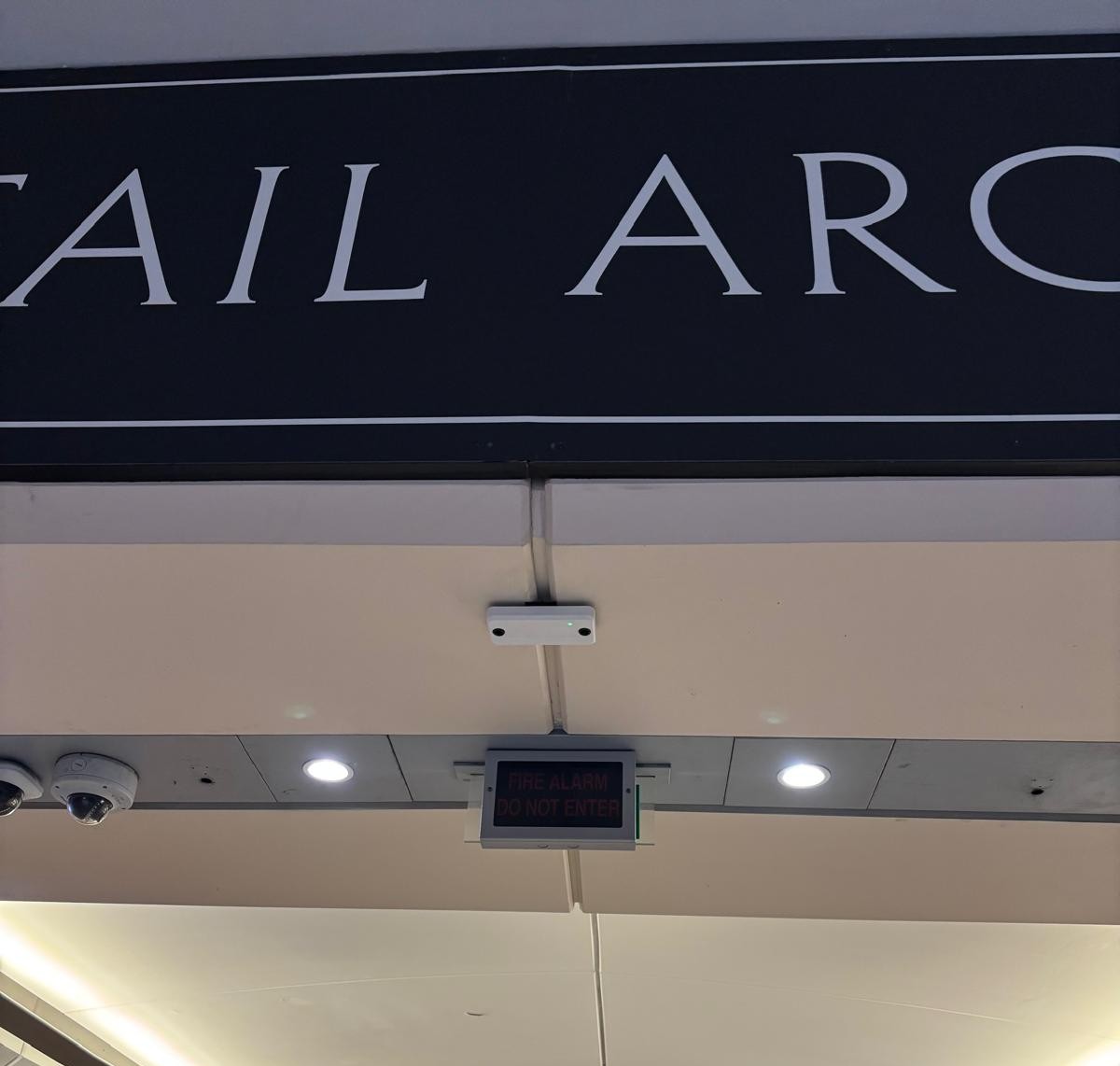
The upgrade delivered improved people-counting for The Shard Retail Arcade. By replacing the ageing Brickstream devices with a simplified Xovis sensor design, the system removed the key causes of underperformance: constrained positioning, stitched overlap zones and limited capability in dense footfall conditions.
The result was a smaller, more efficient sensor estate with better tracking accuracy and a significant improvement in 30-day average count accuracy, rising from approximately 80% to 99.85%.
With daily footfall ranging between 6,000 and 18,000 people outside seasonal holiday peaks, the improved reliability provided a stronger basis for reporting, operational insight and customer confidence.